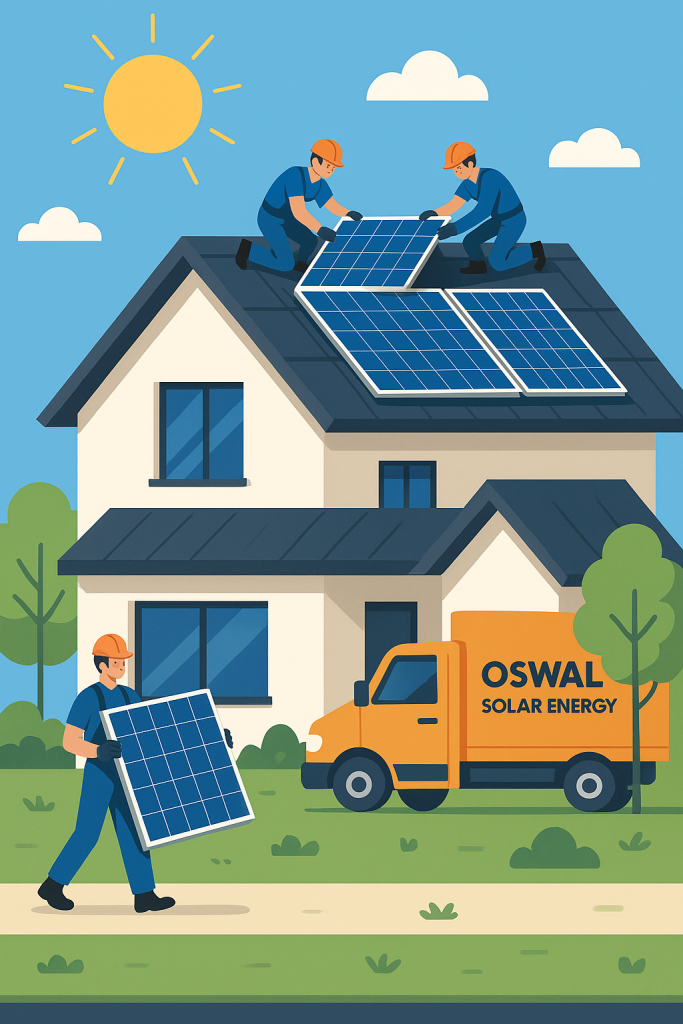

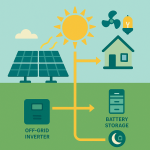
Rooftop solar technology is one of the most reliable and sustainable solutions for generating clean energy. When sunlight falls on a solar module installed on the roof of a home, commercial building, or industrial facility, the photovoltaic (PV) cells inside the module convert sunlight into direct current (DC) electricity. This electricity is then passed through an inverter, which converts it into alternating current (AC) for daily use. Any surplus electricity can either be stored in batteries or exported to the grid for future use.
At Oswal Solar, we offer advanced solar panel systems that are tailored to meet the energy requirements of households, businesses, and industries. Our systems are designed for long-term performance, durability, and maximum energy efficiency.
Benefits of Rooftop Solar
Cost Savings – Reduce or even eliminate your monthly electricity bills.
Grid + Solar Compatibility – Use solar power in combination with your DISCOM electricity supply.
Backup Power Options – With hybrid or off-grid systems, enjoy uninterrupted power supply even at night.
Industrial-Grade Efficiency – Large solar systems available for commercial and industrial applications.
Zero Export Device (Z.E.D.) – Ideal for areas with delayed or no net metering facilities, enabling immediate savings from day one.
Take the step towards a sustainable future with Oswal Solar’s rooftop solar systems — designed to save you money and provide clean energy for years to come.
How Solar Energy Works
Solar energy is a clean and smart way to generate electricity directly from the sun.
Capturing Sunlight Rooftop solar panels are made up of photovoltaic (PV) cells. When sunlight falls on these cells, they generate electricity in the form of direct current (DC).
Converting Power The DC electricity is sent to a solar inverter, which converts it into alternating current (AC) — the usable form of electricity for homes, offices, and industries.
Using the Electricity The converted AC power runs your appliances, lights, fans, and machines just like normal grid power.
Managing Extra Energy
In grid-connected systems, surplus power is sent back to the grid through net metering, reducing your electricity bills.
In hybrid or off-grid systems, excess energy is stored in batteries for use at night or during power cuts.
Different types of Solar Plants:
On-Grid Solar Plant
Best for reducing electricity bills where a utility connection exists.
Lower upfront cost (no mandatory batteries)
Can sell excess energy back to the grid (net metering)
Simple install and lower maintenance
Hybrid Solar Plant
Battery-backed + grid-connected — the flexible, resilient choice.
Battery backup for outages
Optimizes savings and self-consumption
Scalable battery sizing to match needs
Off-Grid Solar Plant
Fully independent systems for places without reliable utility power.